


A container yard rarely runs out of containers before it runs out of space. Ask any terminal or logistics manager in Jebel Ali, Khalifa Port, or a private bonded yard in Al Quoz what keeps them up at night, and land isn’t the answer they wish they could give; but it’s usually the real one. Land in the UAE is expensive, leases are tight, and expansion approvals take time nobody has. So the question stops being “how do we get more space” and becomes “how do we get more out of the space we already have.”
That’s where the container handler earns its keep. A machine that can stack empty or loaded boxes higher, turn them faster, and move through narrower rows doesn’t just move containers, it effectively creates yard capacity out of thin air. This guide looks at how the right container handler changes the maths on yard density, what to weigh up before buying or upgrading, and where genuine parts and service support fit into the total cost of running one.
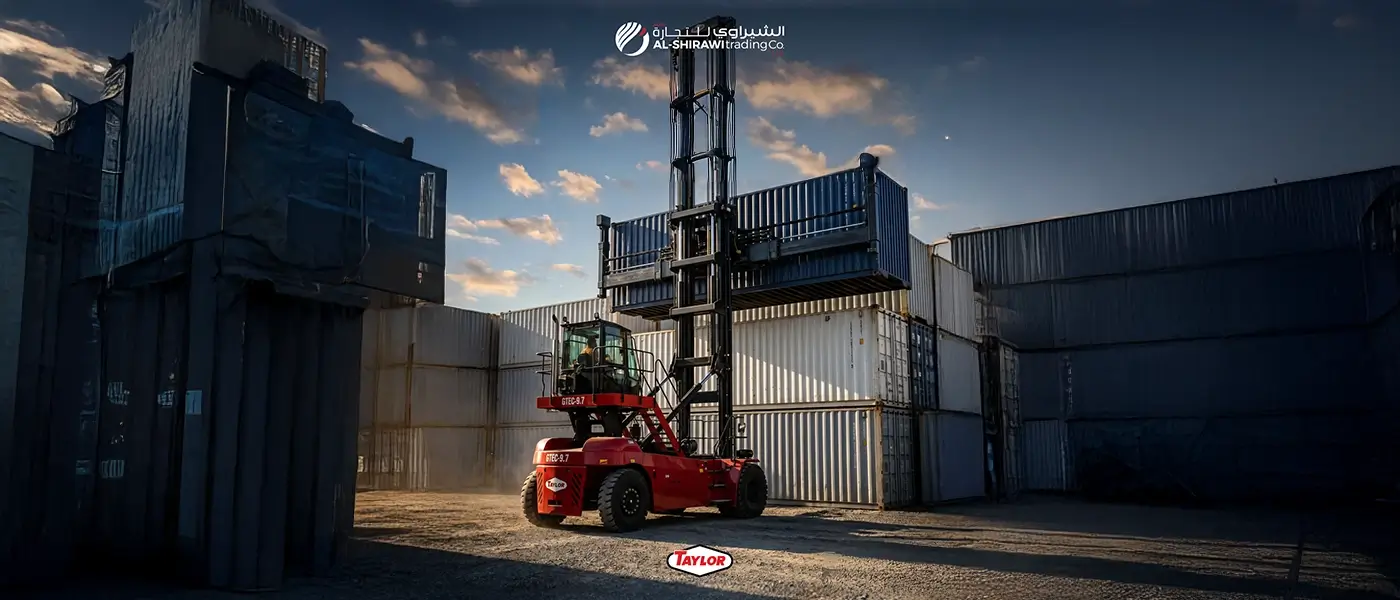
What a Container Handler Actually Does for Your Yard
A container handler is a heavy-duty forklift purpose-built to lift, stack, and reposition ISO shipping containers, empty or loaded, using a container mast, spreader, or top-lift attachment instead of standard forks. Unlike a general-purpose heavy duty forklift, it’s engineered around one job: handling containers safely at height, in tight rows, over and over, all day.
The practical effect on a yard is straightforward. A handler that stacks containers five, six, or seven high uses the same footprint as a machine that only manages three or four. Multiply that difference across a full yard and the ‘extra space’ a business thought it needed often already exists, it’s just stacked in the air rather than spread across the ground.
Why Yard Space Optimisation Comes Down to the Machine, Not the Layout
Many operators try to solve space problems with layout changes first; narrower aisles, tighter rows, revised block plans. Layout matters, but it’s only half the equation. The other half is whether the equipment on site can actually work within that tighter layout without constant repositioning, double-handling, or downtime.
A handler with poor visibility, an underpowered engine, or a mast that struggles at full stack height will slow down every movement in a redesigned yard, cancelling out any density gains on paper. The equipment and the layout have to be planned together, not one after the other.
A few realities worth acknowledging before you commit to a purchase:
- Higher stacking only pays off if the machine can lift the top tier as fast and safely as the bottom one, loaded or unloaded.
- Tighter rows demand tighter turning circles and better sightlines, not just a stronger engine.
- A handler bought for today’s volumes should still make sense if throughput grows 20–30% over the next few years.
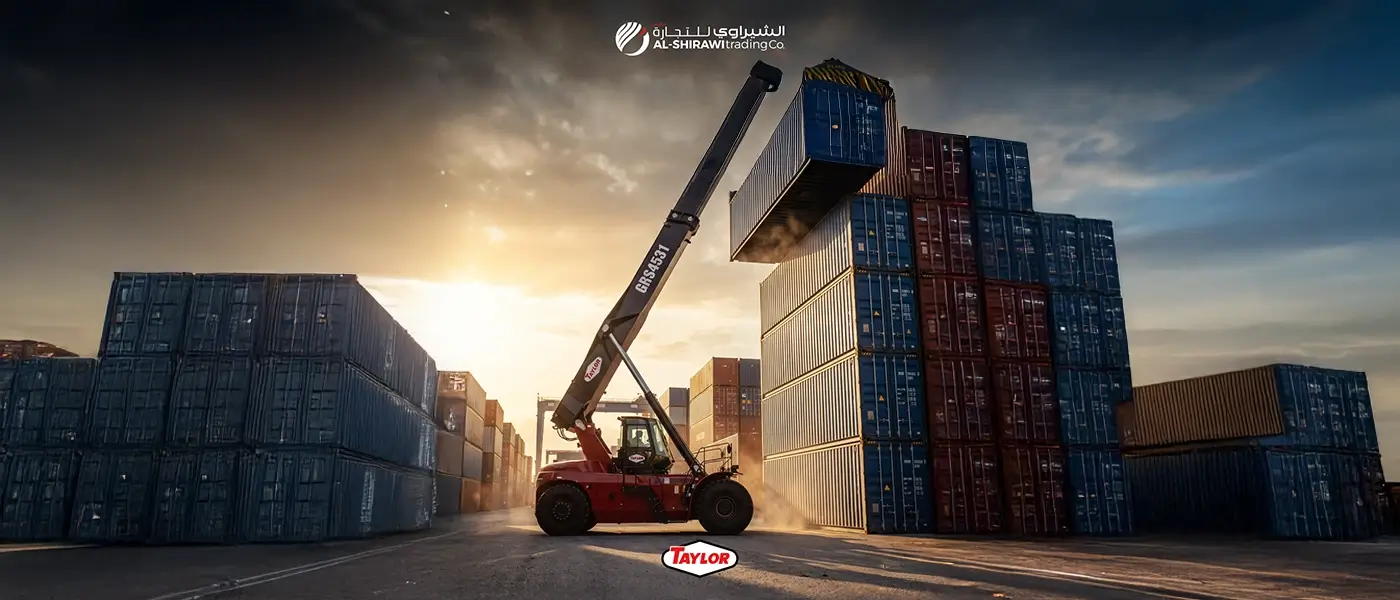
Find Heavy-Duty Container Handlers for Ports
Loaded vs Empty Container Handlers: Choosing the Right Category
This is where a lot of buyers get their first decision wrong, and it’s worth getting right before comparing specific models.
Factor | Loaded Container Handler | Empty Container Handler |
Typical lift capacity | 30–45+ tonnes | 7–10 tonnes |
Stack height focus | Fewer tiers, heavier loads | More tiers (up to 7-high), lighter loads |
Best suited to | Ports, terminals, laden yards | Depots, empty container storage, repair yards |
Chassis design | Reinforced, wider footprint | Lighter, faster cycle times |
Common use case | Vessel discharge, rail yards | Container leasing depots, repositioning |
Buying a loaded-container-rated machine when the yard mostly moves empties (or vice versa) is one of the most common, and most expensive, mistakes in this category. It’s usually cheaper and more efficient to right-size the machine to the actual container mix than to buy the biggest available handler ‘to be safe.’
What to Check Before Buying a Container Handler for Sale
Whether the search is for a container mast forklift for sale, a loaded container handler price comparison, or a full container lift truck for sale, the same checklist applies:
- Confirm the maximum stack height you actually need, not the highest the brochure advertises. Overbuying stack capacity adds cost without adding usable density.
- Match lift capacity to your heaviest realistic container weight, including a margin for mixed cargo loads, not just average weights.
- Check reach and sideshift specifications against your actual row widths, this is what determines real-world cycle times, not the spec sheet in isolation.
- Ask about engine and transmission pairing. A heavy duty diesel forklift working continuous shifts needs a drivetrain built for sustained duty cycles, not intermittent use.
- Review parts availability and service response times in the UAE specifically, before signing anything. A machine is only as productive as the support behind it.
- Get total cost of ownership, not just purchase price. Fuel consumption, tyre wear, and scheduled maintenance intervals vary significantly between models.
The Real Cost of Downtime in a Container Yard
A container handler sitting idle for repairs doesn’t just cost a repair bill, it costs yard capacity. If a single machine handles a meaningful share of daily lifts and it’s down for two days waiting on a part, the yard effectively shrinks until it’s running again. Containers back up at the gate, trucks queue longer, and staff spend time firefighting instead of working the plan.
This is why genuine spare parts and factory-backed service matter as much as the machine specification itself. A shipping container forklift running on non-genuine components might run fine for a while, but mismatched parts on a heavy-duty machine tend to fail at the worst possible moment; mid-shift, mid-stack, with a truck waiting.
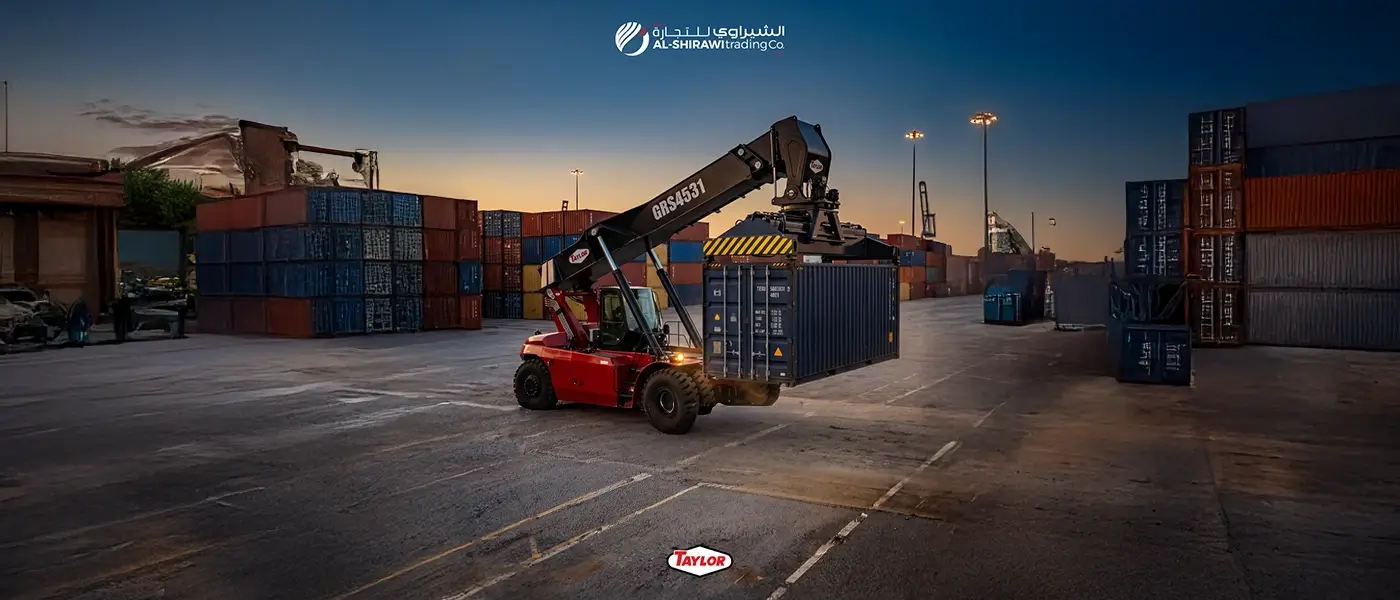
Find Container Handling Equipment for Storage Yards
How Al Shirawi Trading Supports Yard Operators in the UAE
Al Shirawi Trading is the authorised UAE dealer for Taylor Machine Works, a US manufacturer with close to a century of experience building heavy-lift forklifts, reach stackers, and container handling equipment. That partnership gives UAE operators direct access to genuine Taylor parts, factory-trained technicians, and after-sales support built around minimising the kind of downtime described above, not just a sale and a handshake.
The Taylor range available through Al Shirawi Trading covers both sides of the loaded-vs-empty decision, including empty container handlers built for high-tier stacking in depots and leasing yards, and heavy-duty loaded container handlers engineered for continuous port and terminal work. Because the dealership also stocks and services the equipment it sells, buyers get a single point of contact for the machine, the parts, and the maintenance programme, a meaningful advantage when a breakdown needs resolving in hours, not days.
For operators evaluating a heavy duty forklift price or comparing a loaded container handler price against a smaller fleet of general-purpose machines, that after-sales structure is often the deciding factor. A slightly higher upfront machine cost is easy to justify when it comes with guaranteed parts availability and technicians who know the equipment inside out.
A Simple Framework for Deciding What You Need
Before requesting a quote, it helps to answer four questions:
- What’s the heaviest container weight we handle regularly, including peak loads?
- What stack height would actually reduce our footprint, given our current row layout?
- Are we primarily moving loaded boxes, empty boxes, or a genuine mix of both?
- What service response time does our operation need if the machine goes down?
Answering these honestly, before comparing models or prices, prevents the two most common outcomes of a rushed purchase: an oversized machine burning fuel it doesn’t need to, or an undersized one bottlenecking the yard within a year.
Get the Right Container Handler for Your Yard
Yard space optimisation starts with matching the right machine to your actual container mix, stack height needs, and duty cycle not the biggest handler on the lot. Al Shirawi Trading, the authorised UAE dealer for Taylor, can help assess your yard layout and recommend the right container handler, backed by genuine parts and factory-trained after-sales support across Dubai and the wider UAE.
Contact Al Shirawi Trading
Email: marketing.ast@alshirawi.ae
Location: Al Shirawi Building, Airport Road, PO Box 93, Dubai, United Arab Emirates
Frequently Asked Questions
-
What's the difference between a container handler and a standard heavy duty forklift?
A container handler uses a purpose-built mast, spreader, or top-lift attachment designed around ISO container dimensions and stacking heights, giving it far greater lift capacity and reach at height than a standard forklift for container loading tasks.
-
How high can a container handler realistically stack empty containers?
Purpose-built empty container handlers can typically stack up to seven-high, depending on the model, ground conditions, and yard layout — well beyond what a general-purpose forklift can safely manage.
-
Is it better to buy a new or used container forklift for sale?
It depends on utilisation and budget, but any used loaded container handler for sale should come with a full service history and verified parts lineage, since undocumented maintenance is a common source of unexpected downtime.
-
How much does a loaded container handler cost in the UAE?
Loaded container handler price varies significantly by lift capacity, stack height, and specification, so it's best confirmed directly against your operational requirements rather than a general figure — get in touch with Al Shirawi Trading for a tailored quote.
-
Do container handlers need specialised maintenance compared to regular forklifts?
Yes. The mast, hydraulics, and spreader mechanisms on a heavy duty fork truck undergo more stress in continuous stacking work, so manufacturer-specified service intervals and genuine parts matter more than on lighter-duty equipment.
-
Can one container handler serve both loaded and empty containers?
Some heavy-duty models are rated for both, but dedicated machines are generally more efficient for each task — worth discussing with a specialist if your yard handles a genuine mix.
 WhatsApp