


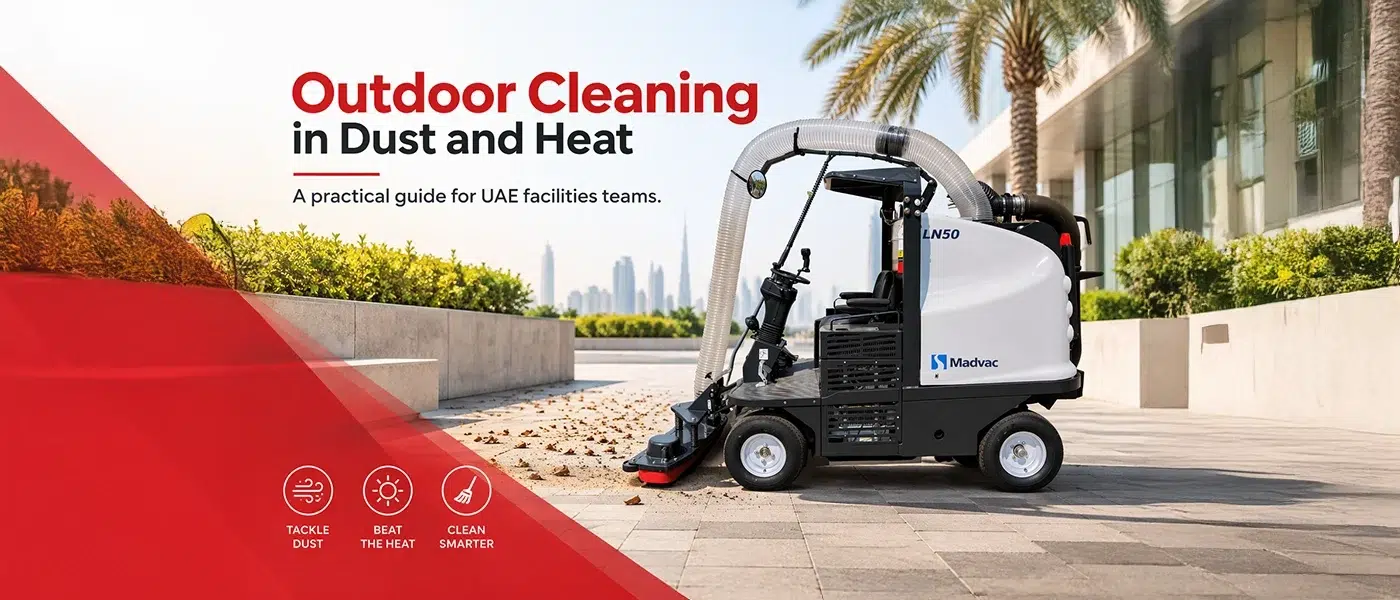
It’s 6:00 a.m. The plaza is spotless. The crew has swept, bagged the litter and cleared the entrance paving before the first tenants arrive.
By 11:00, a light shamal has pushed a film of sand across the same paving. A food-court tray has blown into a planter. Cigarette ends are collecting in the gaps between pavers, and a visitor has noticed.
Nobody did anything wrong. The cleaning plan was simply built for a place where dust and litter stay put. In the UAE, they don’t.
This guide is for facilities and operations managers who deal with that cycle every day. It covers how to schedule outdoor cleaning around sand, heat and foot traffic, where an outdoor sweeper vacuum saves labour, and how to keep your sites in line with what municipalities and community managers expect.
Why Brooms and Bags Lose to Sand
Manual cleaning works until volume goes up. Then three problems appear.
Dust isn’t litter. A broom moves fine sand around rather than removing it. Much of it goes back into the air or onto the next surface.
Litter hides. Cans, cups, wrappers and cigarette ends collect under benches, in planters and along kerbs. Crews spend more time finding them than picking them up.
Heat limits the working day. For much of the year, outdoor manual work gets harder from late morning. Productivity drops, breaks lengthen and the schedule slips.
None of this is a staffing failure. It’s a tool mismatch.
What an Outdoor Sweeper Vacuum Actually Does
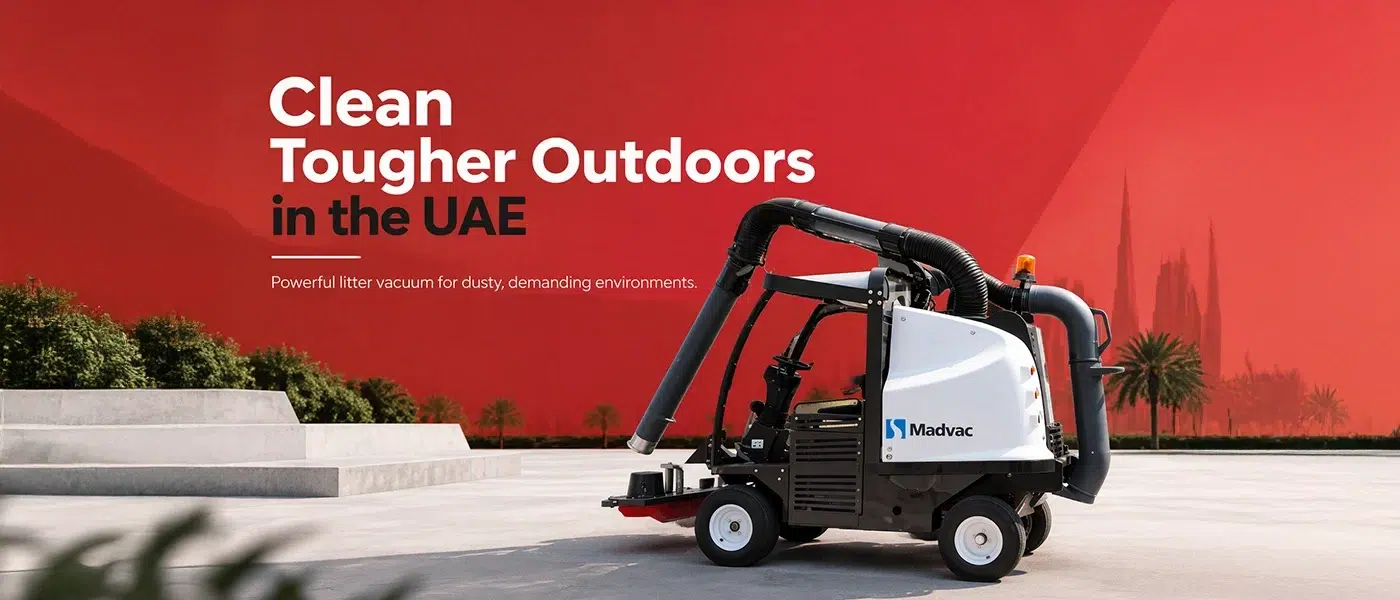
An outdoor sweeper vacuum, sometimes called a litter vacuum, street vacuum cleaner or road vacuum cleaner, uses suction to pick up litter and dust from paving, car parks, walkways and landscaped areas. A hose or a robotic arm lets the operator reach under benches, along walls and into corners that a large street sweeper vacuum can’t enter.
The difference from a mechanical sweeper is the suction. Instead of brushing debris forward, it draws it into a hopper. That’s better for light, loose material like sand, paper, plastic and cigarette ends.
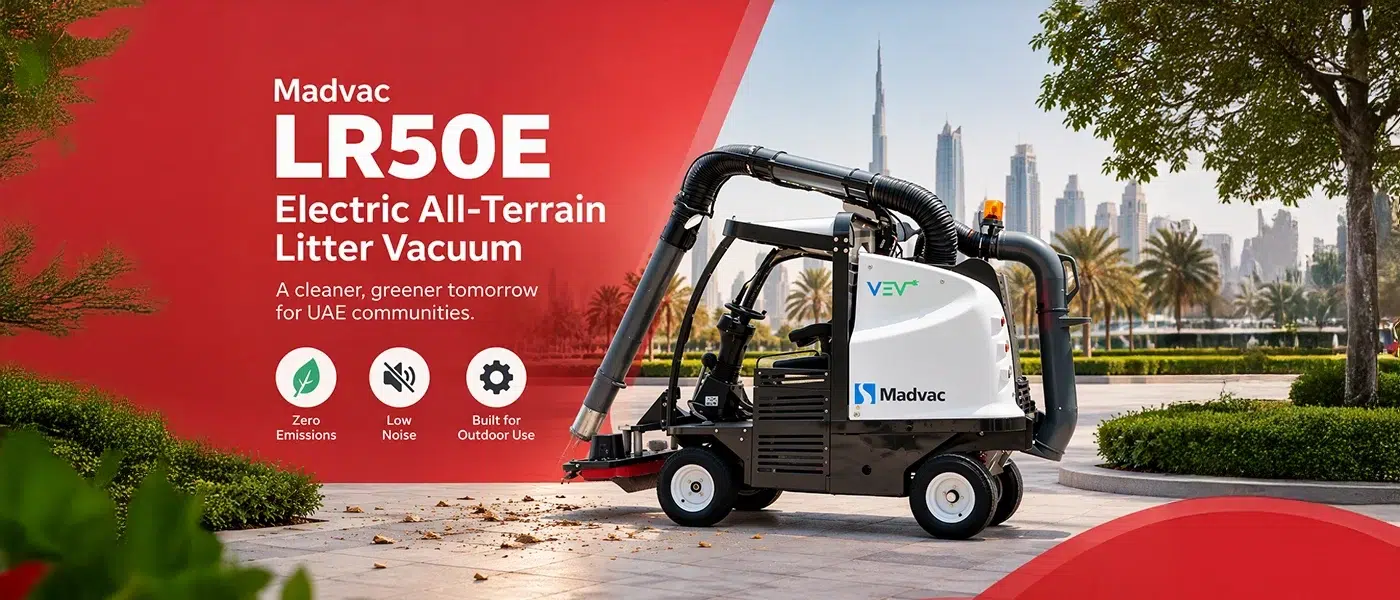
Madvac litter vacuums, supplied in the UAE by Al Shirawi Trading, are built for this kind of work. The range includes diesel and electric all-terrain litter vacuums that run on paving, concrete and grass. Models such as the LN50 and LR50 are about 1.2 m (48 in) wide, which suits pedestrian areas, and carry a wander hose for tight spots. Madvac machines can improve litter collection up to six times faster than manual picking, and the units collect dry or wet debris.
Build the Schedule Around the Dust, Not the Clock
A good plan doesn’t clean everything at the same pace. It matches frequency to how fast each area gets dirty and how visible it is. This table gives you a starting framework to adapt.
Zone | Typical problem | Suggested approach |
Main entrances and forecourts | Visible first, dust settles fast | Clean before opening, spot-check midday |
Car parks and drop-off areas | Litter, sand, cigarette ends | Scheduled vacuum pass, extra after peak periods |
Walkways and plazas | Litter from foot traffic | Early pass plus targeted afternoon pass |
Food and drink areas | Wrappers, cups, spills | Frequent checks, higher priority |
Landscaped edges and planters | Wind-blown litter and sand | Weekly detail clean, quick checks daily |
Service roads and loading areas | Heavier dust and debris | Lower frequency, longer passes |
Three habits make a plan like this work.
- Clean in layers. A deep clean first thing, then lighter spot cleans through the day.
- Prioritise visibility. Entrances, frontages and areas facing roads matter more than back lanes.
- Review weekly. Where does it get dirty again fastest? Move your effort there.
Peak-Time Planning: Cleaning When It Matters
Some days are not like others. Plan for them in advance.
Windy and dusty days. After a shamal or a sandy spell, do an extra pass. Waiting lets sand work into joints and landscaping, which makes it harder to remove.
Events and busy periods. Weekends, school holidays, retail promotions, community events and festivals produce litter in bursts. Put a machine and operator on standby for the end of an event rather than relying on the regular shift.
Summer. The hottest hours hit manual crews hardest. A ride-on machine with a closed or climate-controlled cabin keeps operators working through the day more safely. Schedule the heaviest tasks for the cooler early and late hours.
Seasonal construction and landscaping. Nearby building work and planting add dust to your surfaces. Add a check after major works start.
Tip: Keep a simple log of when and where litter and dust build up. After a month, patterns show up. You’ll see which times and zones need attention and which can be reduced.
Where the Labour Savings Come From
A vacuum doesn’t replace your team. It changes what they spend time on.
- Fewer people on repetitive tasks. One operator on a litter vacuum can cover an area that previously took several people with brooms and pickers.
- Less bending and lifting. Robotic or hose-assisted picking cuts physical strain and helps reduce injury risk.
- Faster turnaround. Large areas get done before opening, not after.
- More targeted work. Staff freed from routine litter picking can do detail cleaning, inspection and customer-facing tasks.
The saving isn’t automatic. It depends on a good schedule, a trained operator and a machine matched to the site.
Diesel or Electric: Choosing for Your Site
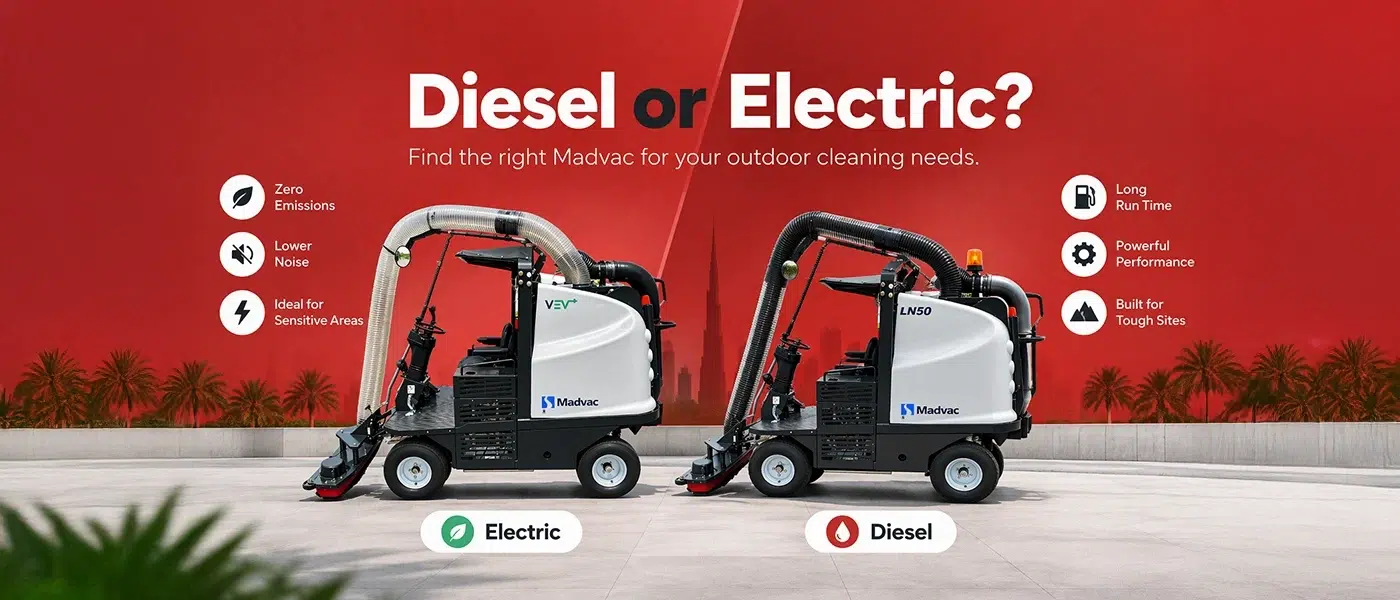
Both have their place. Here’s how to decide.
Consideration | Diesel | Electric |
Run time | Long, refuel quickly | Battery-limited, though Madvac quotes up to 9 hours for some models |
Emissions and noise | Higher | Zero emissions, quieter |
Indoor or enclosed use | Limited | Better for car parks and covered areas |
Charging infrastructure | Not required | Needed |
Best fit | Large sites, long shifts | Malls, hospitality, residential and sensitive areas |
Quieter electric machines suit early-morning work near residents and guests. Diesel suits large outdoor sites where long, continuous shifts matter. Whichever you choose, ask how the machine performs in sustained high temperatures, since heat affects both engines and batteries.
Also look at the details that matter in sand: dust filtration, a water-mist system to limit dust, the size of the hopper and how easily the filters can be reached for cleaning.
Meeting Municipality and Community Expectations
Requirements differ across Dubai, Abu Dhabi, Sharjah and the other emirates, and between communities, malls and free zones. Always confirm what applies to your site with your municipality, master community or landlord — our article on how environmental regulations across the UAE and GCC shape equipment choices goes into more detail on this. As a general rule, they all expect the same things:
- Visibly clean public-facing areas, including entrances, walkways and frontages
- Proper waste handling, with collected litter and dust disposed of correctly
- Safe working practices, including trained operators, warning lights and care around pedestrians
- Controlled noise and emissions, especially near residential areas and at early or late hours
- Records, such as cleaning logs and maintenance history, to show the work is planned and done
A documented schedule is your best protection. If a complaint or inspection comes, you can show what was planned, when it was done and who did it. Our guide on smart cleaning machines keeping UAE cities clean is a useful companion read if you manage public-facing sites.
Keep the Machine Working
Dust is hard on equipment. A litter vacuum that sits idle because of a clogged filter or a worn part costs you more than the labour it was meant to save.
Build a simple routine:
- Daily: check and empty the hopper, inspect hoses, clean the filter, look for leaks.
- Weekly: check filter condition, tyres and wear points, wash down the machine.
- Scheduled service: follow the manufacturer’s service intervals and shorten them in very dusty conditions.
Use genuine spare parts. They fit properly, protect performance and keep the machine within its warranty and design limits. Al Shirawi Trading supports Madvac equipment with after-sales service and genuine spare parts, so you have somewhere to go when the machine needs attention rather than guessing at parts and repairs.
A Quick Checklist for Your Next Review
- Have you mapped every zone by how fast it gets dirty?
- Do you have extra capacity planned for windy days and events?
- Is the heaviest work scheduled away from the hottest hours?
- Do you know how much time your team spends on routine litter picking?
- Is your cleaning logged and documented?
- Do your machines have a defined service and spare parts plan?
- Have you checked current municipality or community requirements for your site?
Plan Your Next Step
A better cleaning plan starts with knowing your site. List your zones, note when they get dirty, and see where manual work is costing the most time.
If you’re considering an outdoor sweeper vacuum for your facilities, Al Shirawi Trading can talk you through Madvac’s diesel and electric all-terrain litter vacuums, help you match a machine to your site, and support it afterwards with service and genuine spare parts.
Contact Al Shirawi Trading
Frequently Asked Questions
-
What is an outdoor sweeper vacuum?
It’s a machine that uses suction to pick up litter, dust and debris from outdoor surfaces. Operators use it on pavements, car parks, plazas and landscaped areas, often reaching places that large street sweepers can’t.
-
What’s the difference between a litter vacuum and a street sweeper?
A street sweeper brushes debris into a hopper and suits wide roads. A litter vacuum uses suction and a hose or arm, which makes it better for pedestrian areas, tight spaces and light, loose material like paper, plastic and sand.
-
Can a litter vacuum handle sand and dust?
It can pick up fine dust and sand, depending on the model. Look for good filtration. If you also require street cleaning, Al Shirawi Trading offers Piquersa street washer sweepers that clean while limiting airborne dust.
-
How often should outdoor areas be cleaned in the UAE?
It depends on the zone. Entrances and food areas need frequent attention, while service roads can be done less often. Extra passes after wind, events and nearby construction are usually needed.
-
Is an electric or diesel litter vacuum better?
Electric is quieter and suits enclosed or sensitive areas. Diesel suits large sites and long shifts. The right choice depends on site size, working hours and charging access.
-
How much labour can a litter vacuum save?
Madvac states that its machines collect litter up to six times faster than manual picking. Actual savings depend on your site, schedule and operator.
-
Do litter vacuums need much maintenance?
Regular cleaning of filters and hoppers and scheduled servicing keep them reliable. In dusty conditions, check filters more often.
-
Where can I get spare parts and support in the UAE?
Al Shirawi Trading provides after-sales service and genuine spare parts for Madvac litter vacuums.
 WhatsApp