


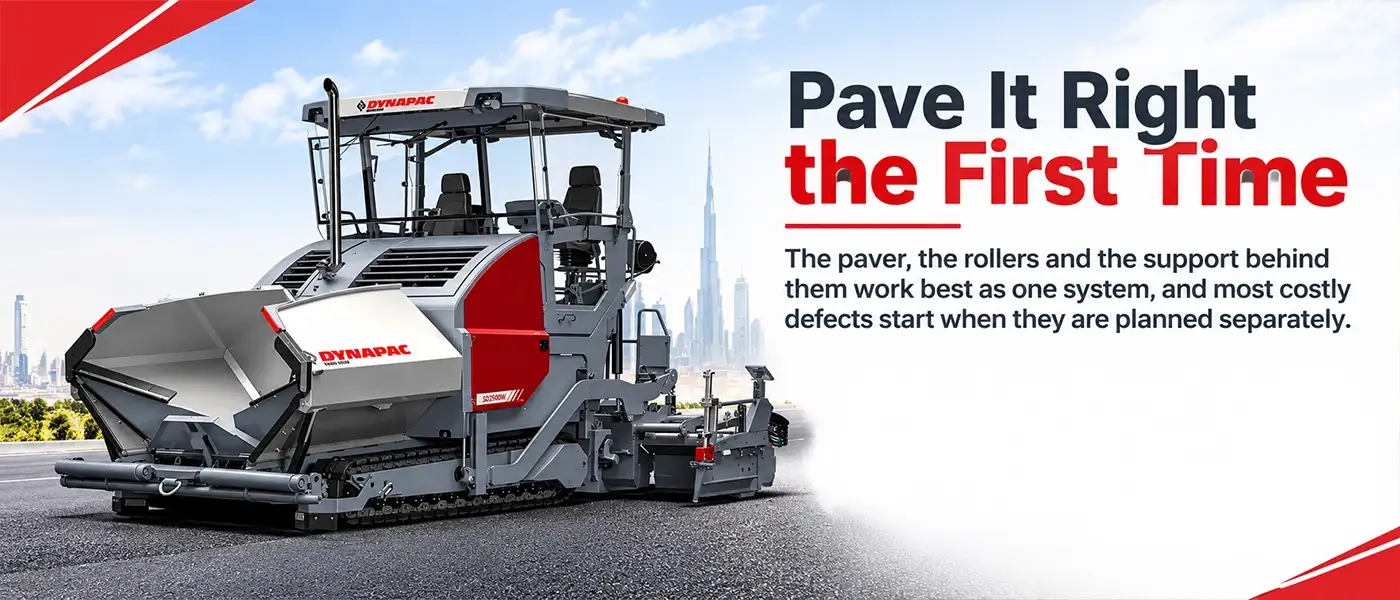
The mat looks perfect on the day you lay it. Smooth, black, evenly finished. The client signs off, the crew moves to the next job, and the profit sheet looks healthy.
Then, eighteen months later, the joint opens up, a wheel path starts to ravel, and a patch of surface begins to ravel. Now you’re back on site with a crew, a truck and a bill that nobody budgeted. In asphalt paving, the expensive mistakes rarely show up at the time they’re made.
This guide covers the eight errors that quietly drain contractor profit, what each one costs, and how to prevent it. Several come back to one habit: treating the paver, the rollers and the support behind them as separate decisions rather than one system.
Why asphalt paving errors cost more than the repair
A paving defect is rarely just a defect. It’s a chain.
Rejected loads mean wasted material. Rework means a second mobilisation. Delayed handover means penalties, tied-up equipment and a crew that isn’t on its next job. And a client who has to call you back about the same road doesn’t give you the next contract easily.
That’s why the numbers on a failed job always look larger than the surface area suggests. The patch itself is cheap. Everything around it isn’t.
Where the money goes | What it looks like on the P&L |
Wasted material | Rejected loads, over-laid thickness, cold mix that can’t be placed |
Rework | Milling out and relaying failed sections |
Idle time | Crew, trucks and machines waiting with no work |
Penalties and retentions | Delayed handover, withheld payments |
Reputation | Lost repeat work and tender opportunities |
The eight mistakes, and how to avoid them
1. Stop-start paving
Warning: a paver that keeps stopping leaves a mark in the mat.
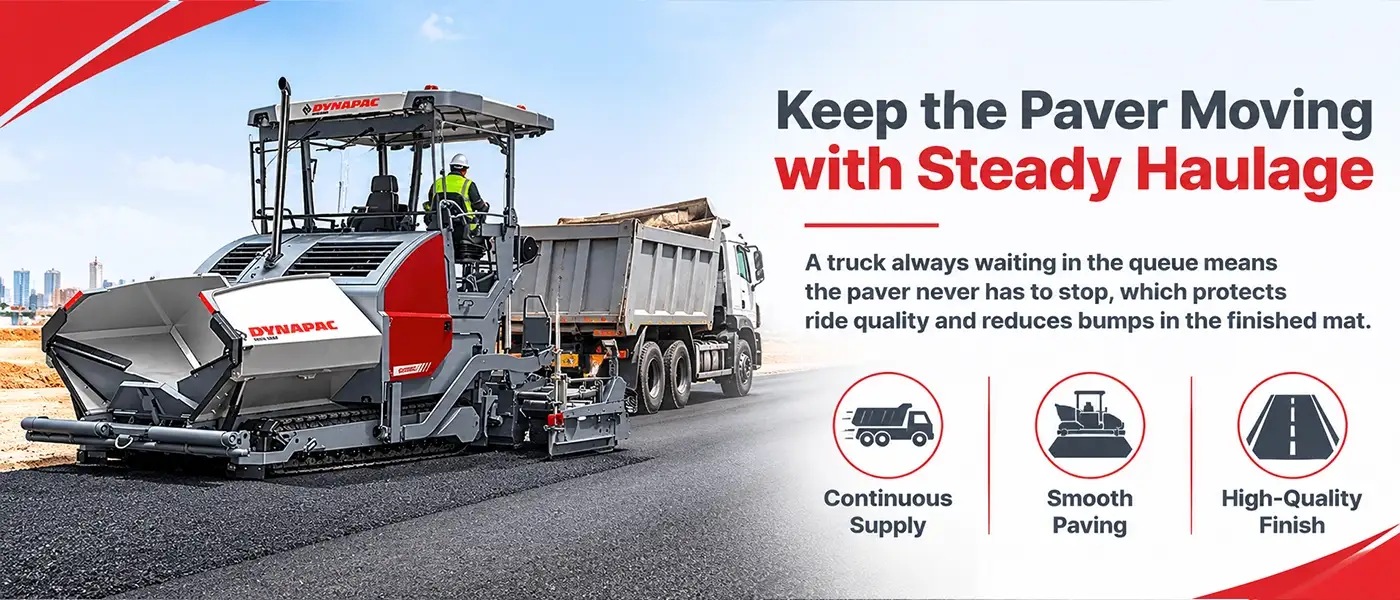
When a paver halts for a truck, the screed settles and the material under it cools. The result is a bump or dip you can feel at speed, and it’s one of the most common causes of ride-quality failures.
The fix sits mostly outside the paver. Plan haulage so there’s always a truck in the queue, and match your paving speed to your plant output. A consistent, slow pace beats a fast pace that keeps halting.
Expert tip: if trucks regularly arrive late, don’t speed up the paver to catch up. That swaps one defect for another.
2. Material segregation
When coarse and fine particles separate, you get patches that look rough and open. Water gets in, and the surface ravels early.
Segregation usually starts before the material reaches the paver: loading practices at the plant, truck unloading, and a hopper that’s allowed to run empty. A paver with good material flow helps, but it can’t fully correct a poorly delivered mix. Keep the hopper reasonably full, and never run it dry between trucks.
3. Skipping tack coat or sloppy surface prep
A new layer that doesn’t bond to the one below moves under traffic. It slips, cracks and, eventually, peels.
Check that the surface is clean, dry and evenly tacked before the paver arrives. A bad tack coat costs very little to avoid. Fixing a delaminated layer means milling it out and starting again.
4. Getting the lift thickness wrong
Too thin, and the mix can’t compact properly. Too thick, and you waste material and risk poor density in the lower part of the layer.
A widely used rule of thumb is that a lift should be several times thicker than the maximum aggregate size in the mix. Follow your mix design and project specification rather than a rule of thumb, and check thickness as you go, not at the end.
5. Rolling at the wrong time
This is where jobs are made or lost. Compaction has a window. Roll too early and the mat shoves and tears. Roll too late and the mix has cooled past the point where density is easy to achieve.
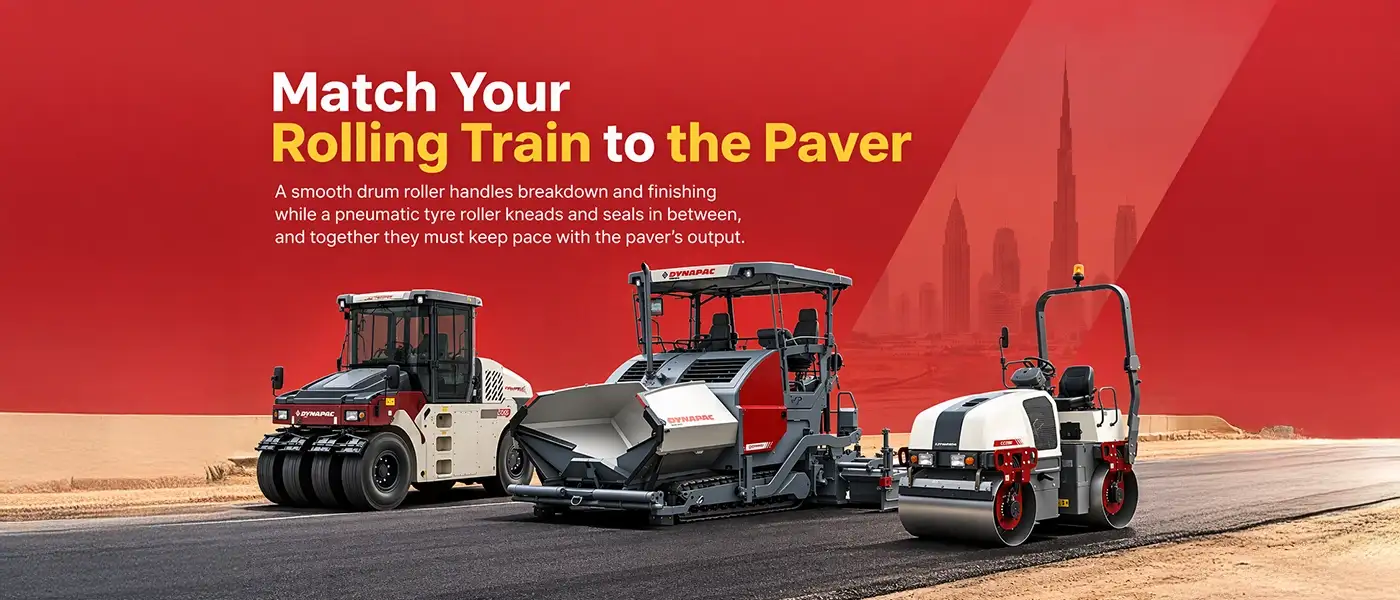
A typical rolling train uses a 10 ton smooth drum roller for breakdown and finish passes, and a pneumatic tyre roller for intermediate rolling. A pneumatic roller kneads the mix and helps seal the surface, which smooth drums can’t do on their own. A common misstep is using too few rollers, or the wrong type, for the paver’s output.
Roller type | Typical role |
Smooth drum (e.g. 10 ton) | Breakdown, final finishing |
Pneumatic tyre | Intermediate compaction, sealing and kneading |
A simple rule: your compaction capacity should keep pace with your paver. If the paver is outrunning the rollers, density suffers, however good the mat looks.
6. Careless joints
Longitudinal and transverse joints are the weakest parts of any pavement. Most early failures start there.
Joints open when the edge is poorly compacted, when the adjoining lane has gone cold, or when the paver’s alignment drifts. Plan the sequence so the adjacent lane is paved while the first is still workable, and give the joint the same compaction attention as the middle of the mat.
7. Ignoring hot-weather realities
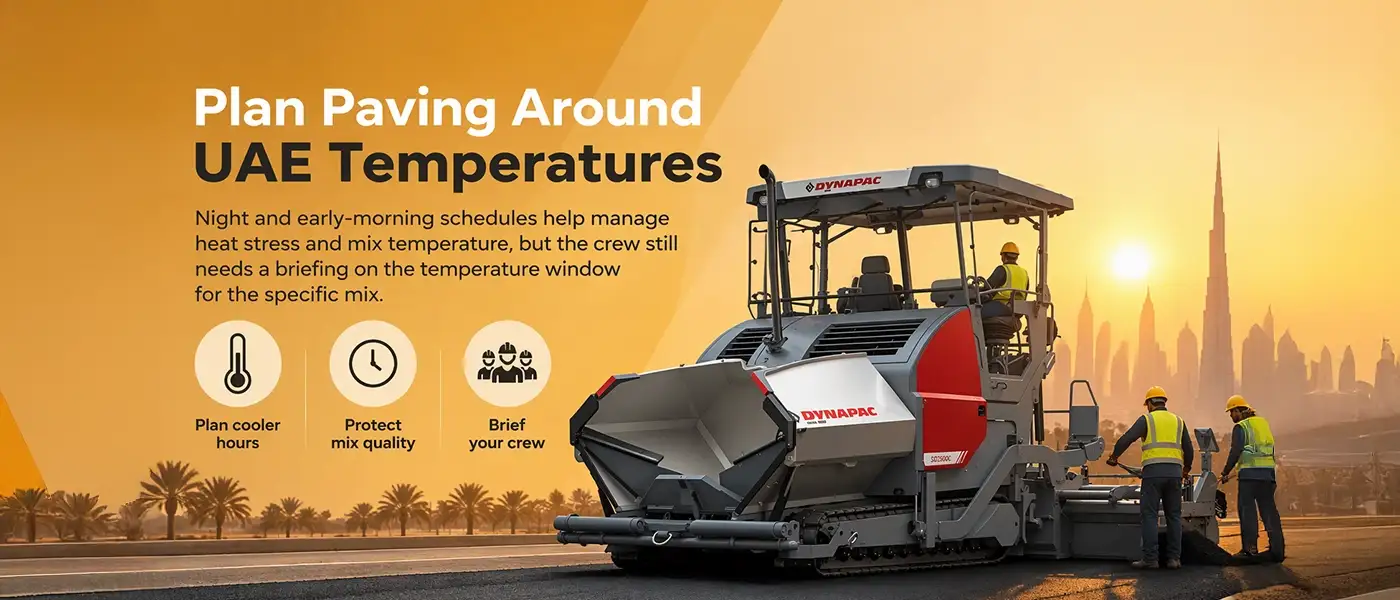
In the UAE, the surface and ambient temperatures are high enough that crews assume heat is helping them. It isn’t always.
High temperatures can make a mix harder to handle, increase the risk of shoving and tracking under rollers, and put crews under heat stress. Many contractors schedule paving at night or in the cooler hours for this reason. Whatever your schedule, brief the crew on temperature windows for the specific mix, not for the season in general.
8. Treating maintenance and spare parts as afterthoughts
This one is the quietest and, over a fleet’s lifetime, often the most expensive.
A worn screed plate, a tired auger or conveyor chain, or a sloppy control setting produces defects that look like operator errors. Crews then compensate on the job, and the mat suffers. Cheap or unverified parts can make it worse, because slight differences in fit and wear affect how the machine performs.
Three habits protect you:
- Inspect screed, augers and conveyors on a schedule, not when something breaks.
- Use genuine spare parts so components behave as the machine was designed.
- Keep a service record, so you can see patterns before they become failures.
Where the right equipment makes a difference
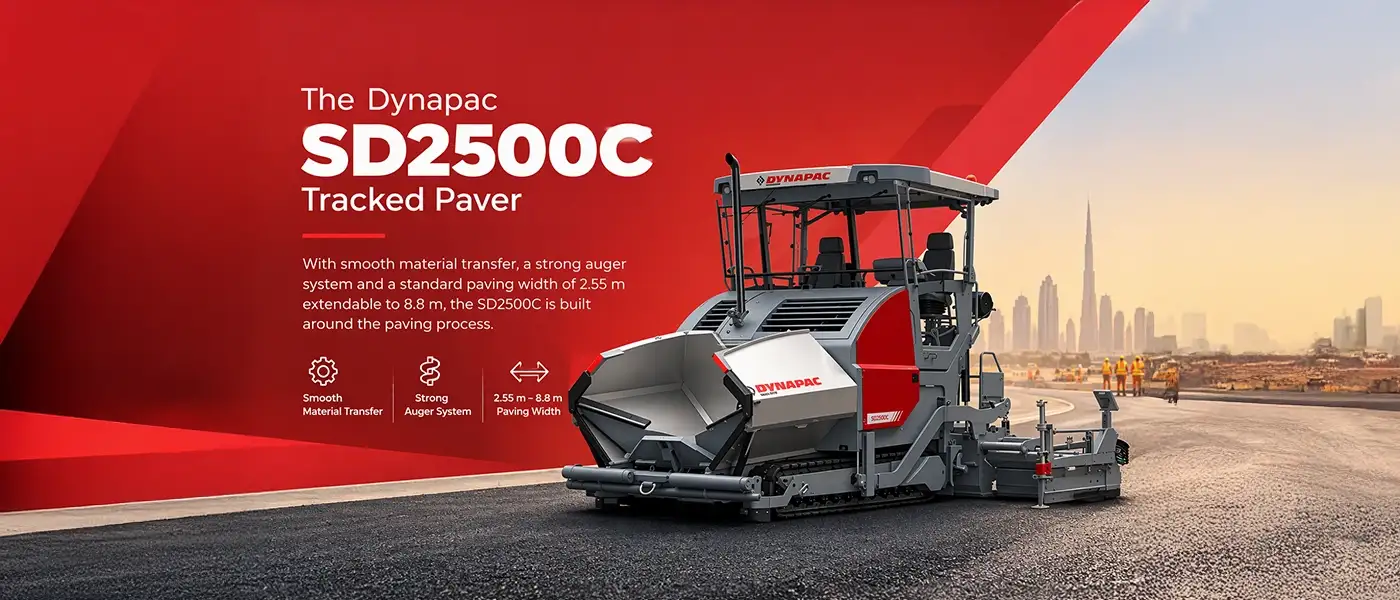
Equipment can’t fix poor planning, but it can remove avoidable problems. A paver with good material flow, a stable screed and a clear control system gives the crew fewer things to compensate for.
Take the Dynapac SD2500C, a tracked paver in the large-paver SD range. It’s designed around the paving process: smooth material transfer to reduce segregation, a strong auger system, and the Pave Manager control approach that helps operators keep settings consistent. Standard paving width is 2.55 m, extendable up to 8.8 m with the extension parts, which suits many road and highway jobs.
Pairing a paver like this with matched Dynapac road compaction equipment keeps the whole train working at the same pace: paver, smooth drum rollers and pneumatic tyre rollers. If you’re also comparing asphalt pavers for sale, look past the paving width and engine. Ask what support exists once the machine is on site.
That’s where local expertise matters. Al Shirawi Trading is the authorised Dynapac dealer in the UAE, with sales, rentals, genuine spare parts and after sales service for Dynapac equipment. Having technicians and parts close to your project means a screed problem or a roller fault doesn’t turn into a lost week.
A quick pre-paving checklist
Run through this before every job. It takes ten minutes and prevents most of the problems above.
- Haulage plan confirmed, with enough trucks to keep the paver moving
- Surface clean, dry and tack-coated
- Lift thickness checked against the specification
- Paver screed, augers and conveyors inspected
- Roller types and numbers matched to paver output
- Joint sequence planned
- Temperature window briefed to the crew
- Spare parts and service contact on hand
Get ahead of the next mistake
Most asphalt paving failures are preventable. They come from planning gaps, mismatched equipment and maintenance that gets postponed. Fix those, and rework drops, material waste falls and your margin improves.
If you’re planning a project, looking at asphalt pavers, or reviewing your compaction train, speak to the team at Al Shirawi Trading. They can talk you through the Dynapac SD2500C, Dynapac road compaction equipment, genuine spare parts, after sales service and local support for your fleet. Start at alshirawitrading.com/dynapac-asphalt-pavers-uae and get the right machines and support in place before the next job starts.
Contact Al Shirawi Trading
Frequently Asked Questions
-
What is the most common asphalt paving mistake?
Poor compaction timing is among the most common, followed by stop-start paving and badly handled joints. Compaction errors are costly because they’re often invisible until the surface starts to fail.
-
How many rollers do I need behind a paver?
It depends on paving width, lift thickness and output. The rule is that compaction capacity must keep up with the paver. A common setup is a smooth drum roller for breakdown and finishing with a pneumatic tyre roller between them.
-
What does a pneumatic tyre roller do?
A pneumatic roller kneads the asphalt, helps close the surface and improves density. It’s typically used for intermediate compaction between smooth drum passes.
-
What size roller is typical for asphalt work?
A 10 ton smooth drum roller is a common choice for breakdown and finishing on many road projects. The right size depends on the mix, layer thickness and the paver’s output.
-
Why does asphalt crack soon after paving?
Common causes include poor bonding between layers, low density, weak joints, incorrect thickness and compaction at the wrong temperature. Early cracking is usually a process problem, not a material problem.
-
Does using genuine spare parts really matter on a paver?
Yes. Genuine parts are made to the machine’s specification, so wear, fit and performance stay predictable. Unverified parts can change how the screed, augers and conveyors behave, which shows up in the mat.
-
How can I reduce asphalt waste on site?
Match truck deliveries to paving speed, keep the hopper from running empty, check thickness continuously, and avoid cold loads. Good planning does more than any machine setting.
-
What should I look for when buying an asphalt paver?
Look at material flow, screed stability, control system, parts availability and local service. A paver is only as productive as the support behind it.
 WhatsApp