


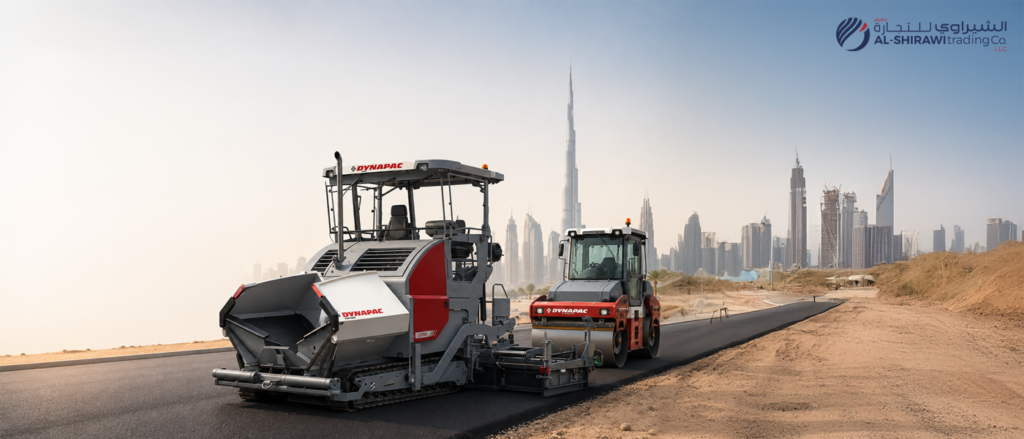
A road that fails within a few years of resurfacing isn’t usually a materials problem; more often, it’s a compaction problem. Cracking, rutting, and premature wear frequently trace back to the compaction stage, where the wrong equipment or poor technique locks defects into the road before it’s even opened to traffic. For UAE contractors working in extreme heat and tight project timelines, getting compaction right the first time matters more than almost any other stage of paving.
Where Paving Defects Actually Come From
Common asphalt and road defects link directly to compaction quality:
| Defect | Typical Cause |
|---|---|
| Rutting | Under-compaction, allowing the asphalt to deform under traffic loads |
| Cracking | Uneven compaction or rolling outside the correct temperature range |
| Poor Density | Insufficient rolling passes or incorrect roller selection |
| Surface Texture Issues | Incorrect drum type or improper vibration settings for the asphalt mix |
Each of these is preventable with the right equipment, correctly specified for the job and mix design.
How Dynapac Equipment Addresses These Issues Directly
Dynapac has built its reputation in road construction equipment specifically around minimising these compaction defects. Key advantages contractors gain from Dynapac compactors and rollers include:
- Precise compaction control, helping achieve consistent density across the full pass, rather than uneven results that lead to premature failure
- Advanced vibration and amplitude settings, matched to different asphalt mixes and layer depths
- Durable build quality, engineered to maintain performance consistency across long, hot UAE working days
- A full range of roller classes, from compact rollers for urban and confined work through to heavier double drum rollers for major road projects
Matching the right roller to the job
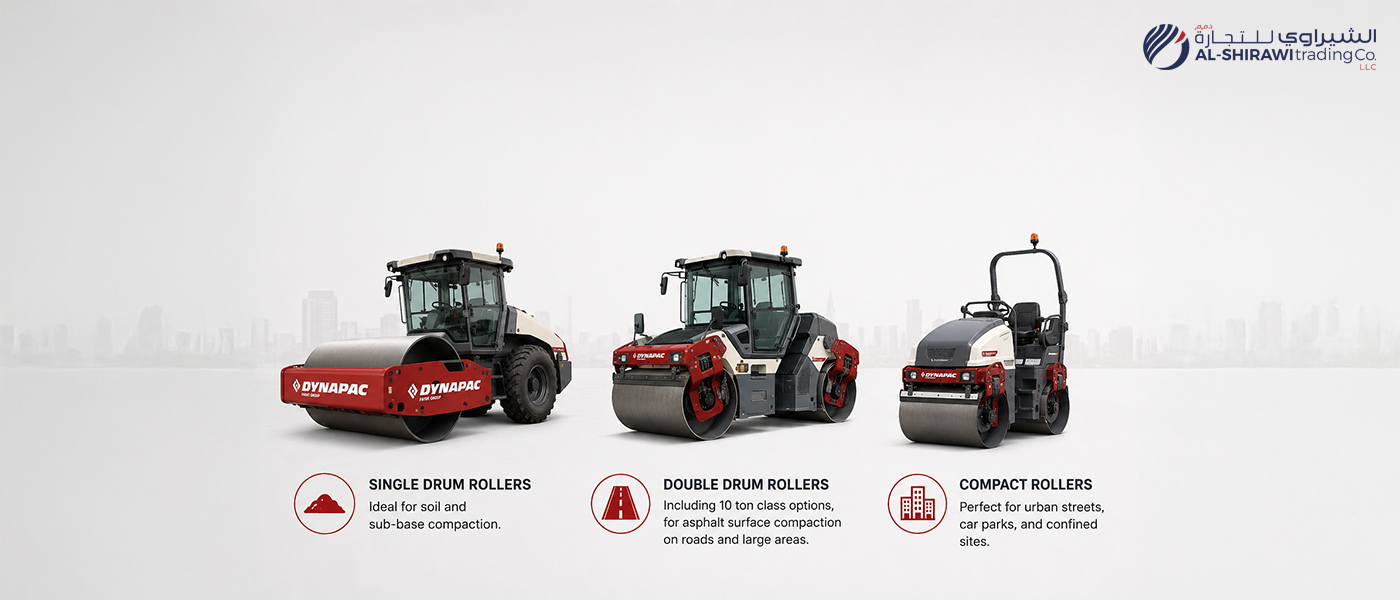
- Single drum rollers — well suited to soil and sub-base compaction ahead of paving
- Double drum rollers, including options in the 10 ton class — designed for asphalt surface compaction on roads and larger paved areas
- Compact rollers — practical for urban streets, car parks, and confined sites where manoeuvrability matters as much as compaction force
Beyond the Machine: Why Technique Still Matters
A Partnership Built on More Than Equipment Supply
Ready to Pave with Confidence? Let's Find Your Right Dynapac Roller
Fewer defects start with the right equipment on day one. Our team at Al Shirawi Trading can help you specify the correct Dynapac compactor or roller for your project scope, backed by genuine parts and after-sales support across the UAE.
Contact Al Shirawi Trading
Email: marketing.ast@alshirawi.ae
Location: Al Shirawi Building, Airport Road, PO Box 93, Dubai, United Arab Emirates
Frequently Asked Questions
-
What causes rutting and cracking in newly paved roads?
These defects typically result from under-compaction, incorrect rolling patterns, or compacting outside the asphalt's correct temperature window.
-
How does Dynapac equipment help prevent paving defects?
Dynapac compactors and rollers offer precise compaction control and consistent vibration settings, helping achieve uniform density across the full pass, which reduces the risk of premature road failure.
-
What's the difference between a single drum and double drum roller?
Single drum rollers are typically used for soil and sub-base compaction, while double drum rollers are designed for asphalt surface compaction on roads and paved areas.
-
What size roller is needed for major road projects in the UAE?
Larger projects typically require heavier-class rollers, such as 10 ton double drum models, though the right choice depends on layer depth and asphalt mix.
-
Does Al Shirawi Trading offer genuine parts for Dynapac equipment?
Yes, as the official UAE Dynapac dealer, we supply genuine spare parts and after-sales support for the full Dynapac equipment range.
-
Can Dynapac rollers be used for both soil and asphalt compaction?
Different roller types are suited to different applications — our team can help match the correct Dynapac model to your specific compaction requirement.
 WhatsApp